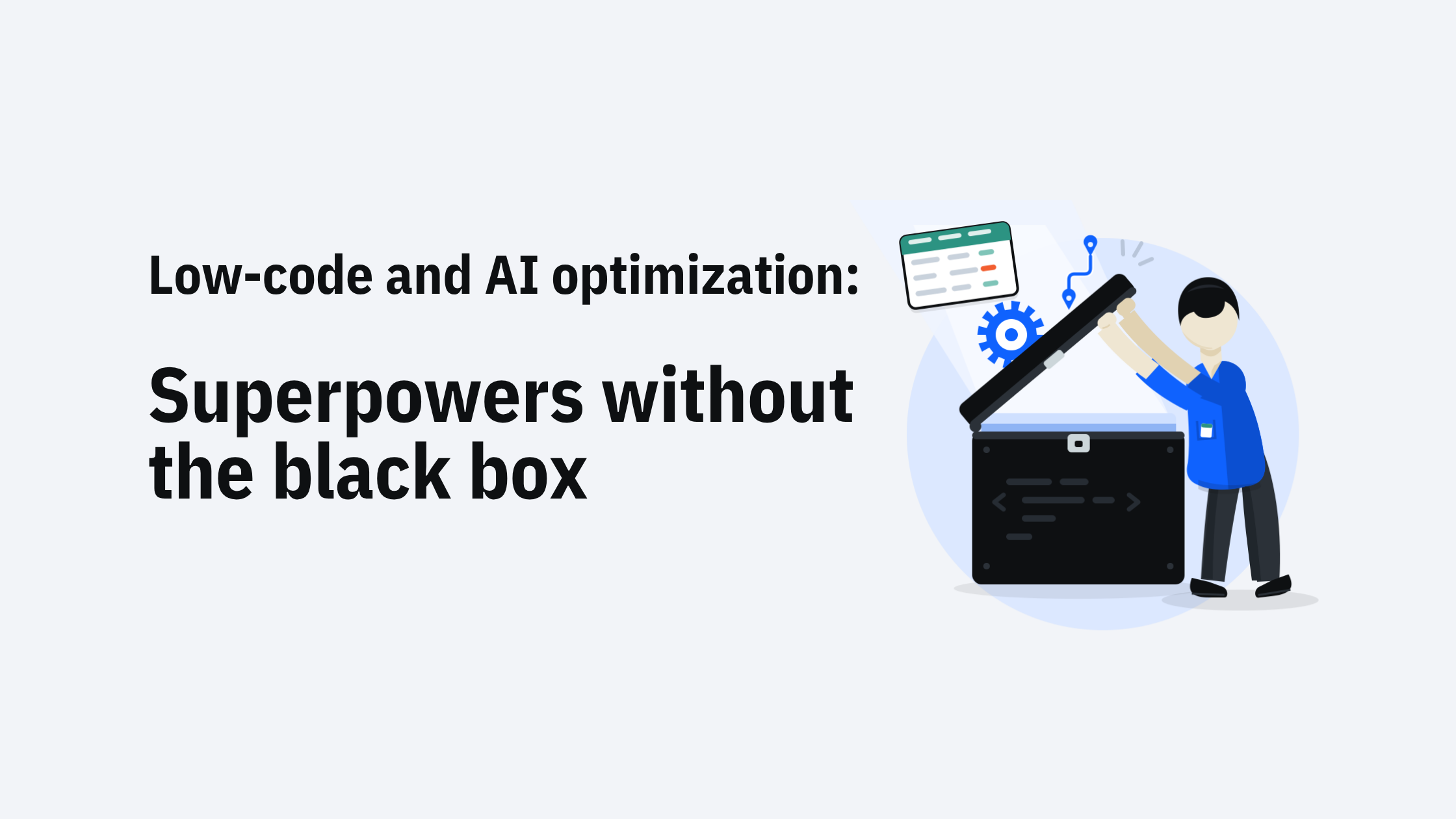
Low-code lets non-developers build the tools their business runs on, and AI now writes code from a sentence. But pure code becomes a black box you cannot see inside. The opportunity: build on a platform where your data stays visible and access-controlled, then plug in a service optimization engine via an API to handle the hard decisions. Full control over your data, specialist intelligence on tap, no black box on either side.
Something powerful is happening in operations software. People who are not professional developers are building the tools their business runs on. Low-code platforms, and now AI assistants that write code from a sentence, have put app-building in reach of the person who actually understands the problem.
There is a catch, and anyone who has tried to maintain a hand-built app knows it. When you build everything as code, especially without a software background, you end up with a black box. A heap of logic, maybe a database somewhere behind it, that works until it does not, and that nobody can see into.
Vibe-coding your way to a running app is easy. Living with the result is not.
This is the real case for low-code platforms, and it is bigger than convenience.
The advantage of building on a low-code platform, like Quickbase, is not that it writes the code for you. It is that your data stays visible and under your control. Your tables look and behave like spreadsheets. You can open them, read them, correct a row by hand. You can grant one team access to some tables and not others. You can import data in and export it out. Privacy, security, and access levels are settings you manage, not assumptions buried in a script.
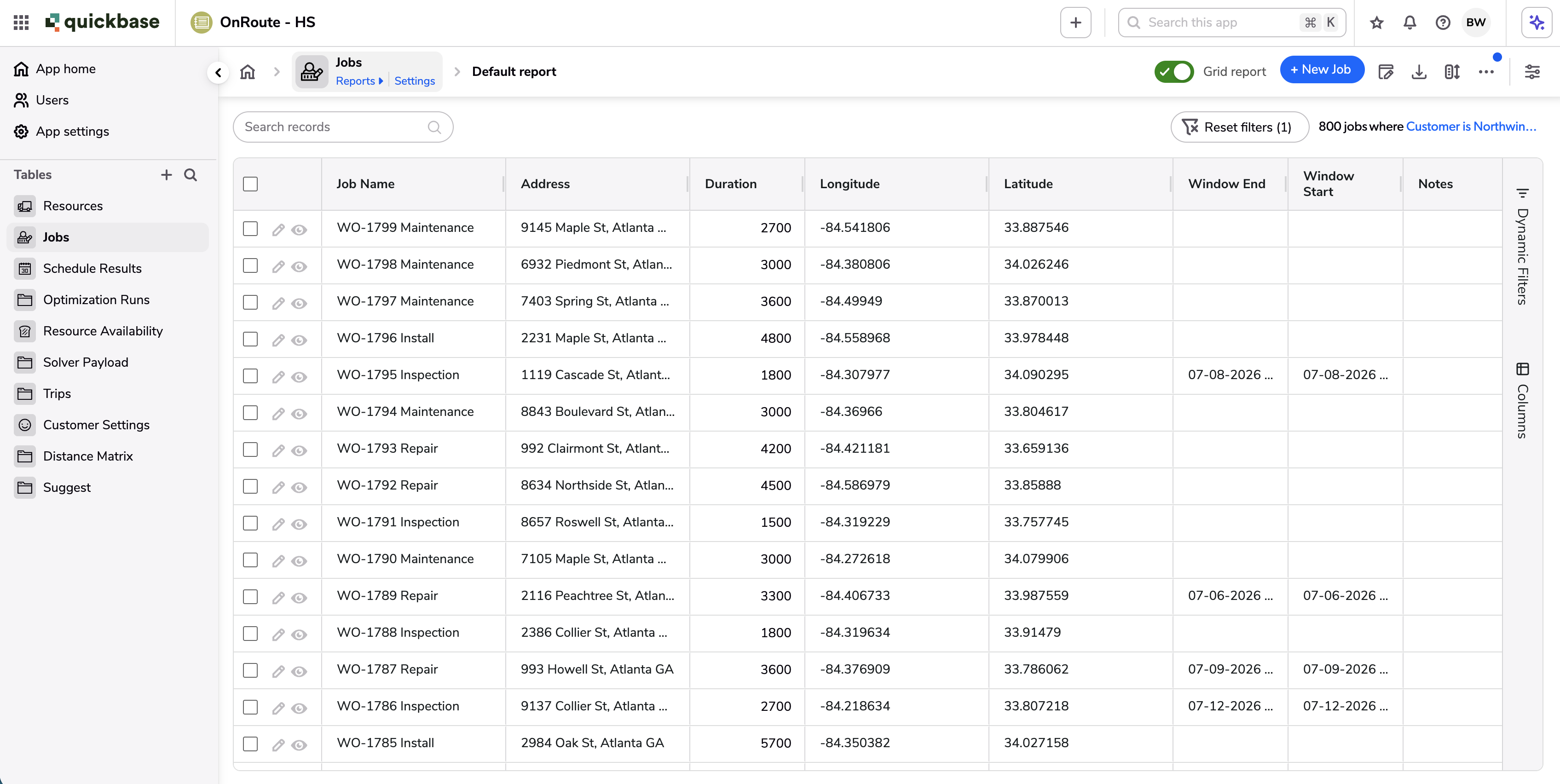
That is the opposite of a black box. You can point at exactly where every piece of information lives and who is allowed to touch it. For a regulated operation, or any business that takes its data seriously, that transparency is not a nice-to-have. It is the whole reason to build this way.
A low-code platform is excellent at the things that surround a decision: holding the data, capturing input, routing approvals, showing dashboards, controlling access. What it does not contain is a way to make a genuinely hard decision.
Assigning 300 jobs to 40 people for the day, in the right order, without breaking a time window or a skill rule, is a genuinely hard decision. It is not just another automation. It is an optimization problem, and it needs an engine built for it. The move that unlocks everything is to plug that engine in through an API.
This is where the superpower comes from. You keep the visible, controllable app you built, and you connect it to a smart engine that does the part the app cannot. That engine could be a large language model for the language-shaped problems. For planning and routing it is a service optimization engine: a solver that assigns and sequences work against real constraints and hands the answer back to your app. The person who built the app never had to become an operations-research specialist. They made an API call.
Learn about to build your own Route Optimization and Scheduling apps in Quickbase here.
Plenty of operations are served fine by a standard SaaS product. This is not about them. It is about the businesses where no off-the-shelf tool fits, because their constraints, their workflow, or their scale are too specific.
At Solvice we have customers exactly like this. They run our optimization API in the background and build their own product experience on top, choosing precisely which capabilities to expose to their users. The API supplies the intelligence. They own the interface and the decisions about what their operation needs.
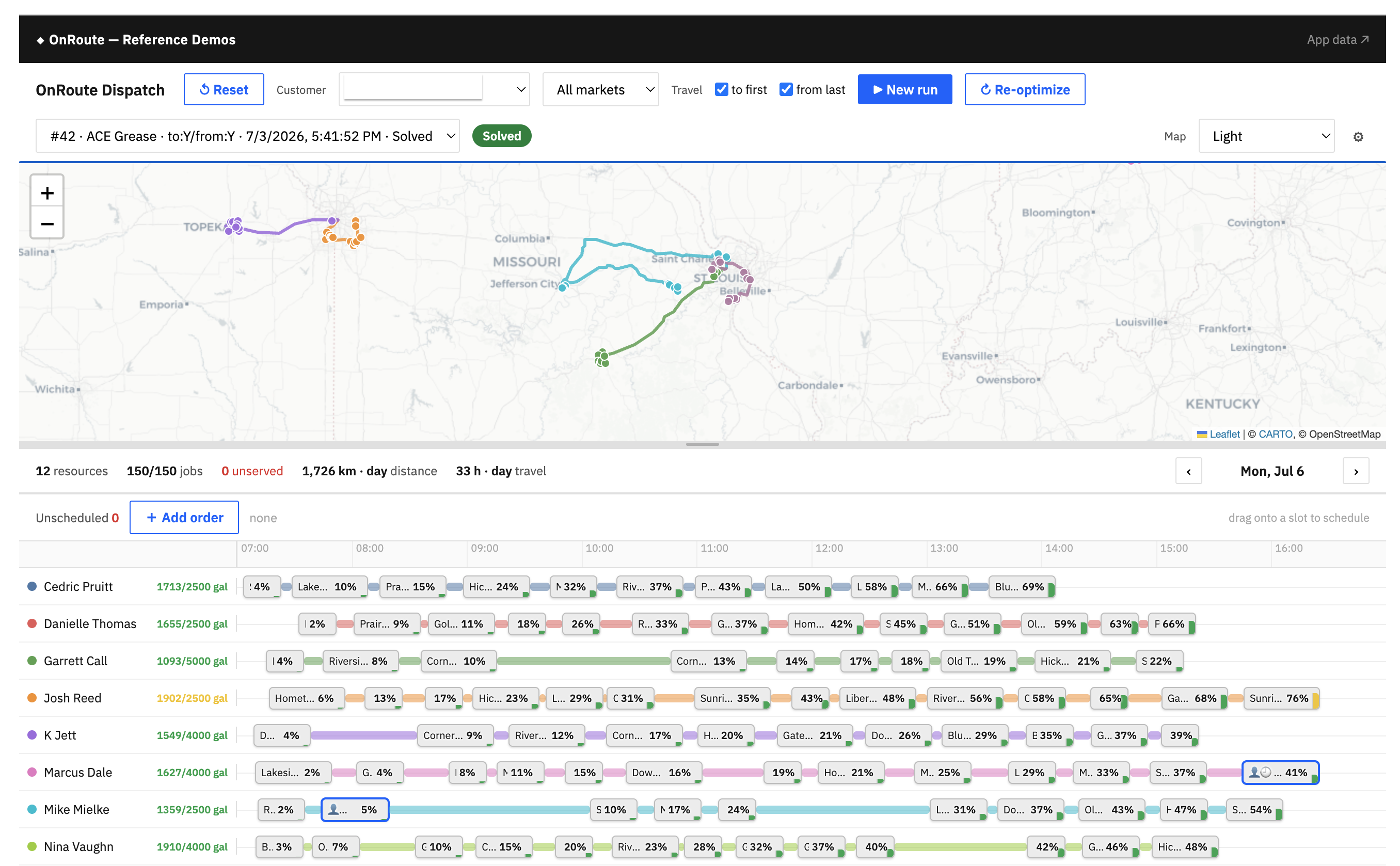
Low-code brings that same freedom to the business that wants to build for itself rather than buy. Instead of vibe-coding an opaque application and hoping it holds, you assemble it on a platform where every table, permission, and workflow is in plain sight, and you reach out through an API to the optimization engine for the hard part. Full control over your data. Specialist intelligence on tap. No black box on either side.
It is worth saying that the optimization engine does not have to be opaque, because the good ones are not. A constraint-based solver can tell you why it made a choice: which rule forced a job to a particular person, or why another job could not be scheduled at all. That matters the moment an operator asks the obvious question, why did it plan it this way, and it keeps the transparency you chose the platform for all the way down to the decision itself.
The interesting frontier is combining both kinds of engine. Through emerging standards like the Model Context Protocol, an AI assistant can sit on top of the same setup and drive the optimization engine in plain language. Schedule these deliveries for tomorrow with three drivers. The assistant handles the conversation, the solver makes the plan, the low-code app holds the data and shows the result. Three layers, each doing what it is best at, and you can see into all of them.
That is the opportunity. Not low-code instead of developers, and not AI instead of judgment, but a controllable app wired to specialist engines, giving the people who understand the operation the power to build exactly what it needs.
If that is the position you are in, we are happy to show you where the optimization engine fits.
Curious about how to technically realize the above in Quickbase? Check the how-to article here.